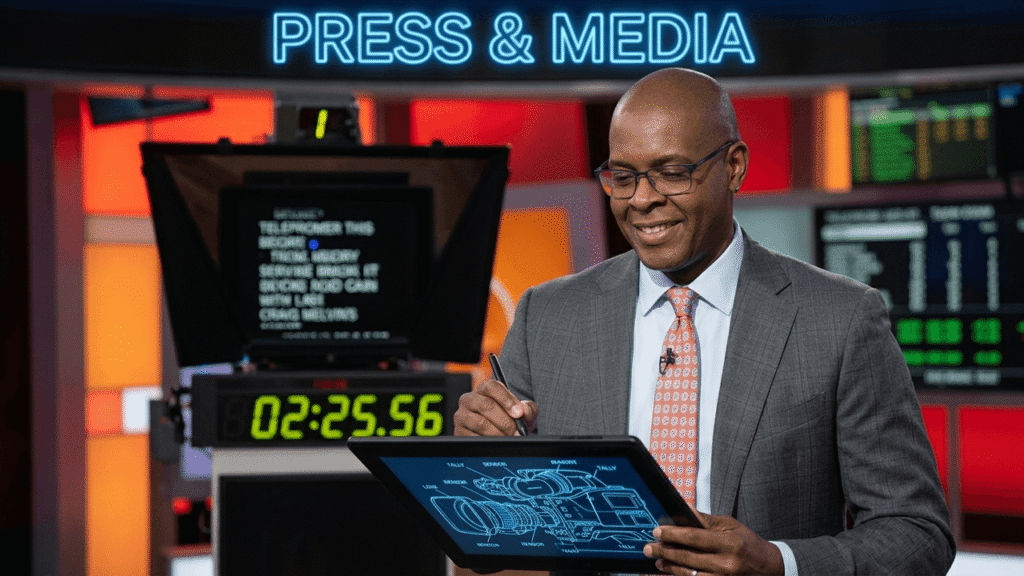
Ricky C. Williams provides practical, thoughtful commentary on anger management, emotional regulation, men’s emotional wellness, workplace conflict, communication, fatherhood, grief, and leadership under pressure.
With more than 14 years of experience teaching anger management, Ricky helps audiences understand why anger appears, what it may be communicating, and how people can respond without allowing one emotional moment to control their future.
He is available for:
- Television and radio interviews
- Podcast guest appearances
- Newspaper and magazine commentary
- Online publications
- Expert panels
- Corporate events
- Keynote presentations
- Educational collaborations
MEDIA INTRODUCTION
A Practical Voice on Anger, Emotional Control, and Human Behavior
Anger is frequently discussed only after something has gone wrong.
Ricky C. Williams helps audiences examine what happens before the reaction—the trigger, the underlying emotional wound, and the choices that can prevent anger from becoming destructive.
His approach is calm, accessible, and accountability-centered. He explains emotional regulation without complicated clinical language and gives audiences practical strategies they can apply in relationships, families, workplaces, and leadership roles.
Ricky’s central message is:
Anger Is a Signal—Not a Personality
People are not automatically defined by the fact that they experience anger. The critical question is how they interpret that signal and what they choose to do next.
Ricky helps audiences understand that recognizing the reasons behind anger does not excuse harmful behavior. Greater awareness creates greater responsibility—and more opportunities to choose a healthier response.
ABOUT RICKY C. WILLIAMS
Ricky C. Williams is a certified anger management coach, certified mediator, corporate wellness trainer, keynote speaker, author, and host of The Ricky C Williams Podcast.
For more than 14 years, he has helped people understand anger, identify destructive patterns, improve communication, and develop healthier responses to pressure and conflict.
Ricky spent seven years teaching court-ordered anger management. That experience gave him a firsthand view of the personal, relational, professional, and legal consequences that can follow when anger remains unmanaged.
His work is also informed by his personal journey through grief and fatherhood. After losing his wife, Makia, to stage-four cancer in 2019, Ricky became the sole parent of their two young children. That experience deepened his understanding of grief, emotional resilience, personal responsibility, and the generational importance of emotional regulation.
A native of Lake Charles, Louisiana, Ricky earned a Bachelor of Science in Business Marketing from Grambling State University.
Today, he uses education, coaching, media, books, and corporate training to help men, couples, leaders, and organizations move from reaction to regulation.
AREAS OF EXPERTISE
Media Commentary and Interview Topics
Ricky is available to contribute educational commentary in the following areas.
Anger Management
- Why people become angry
- Early warning signs of escalation
- Healthy anger versus destructive anger
- Why suppressing anger does not resolve it
- How to interrupt an emotional reaction
- Accountability after an angry outburst
- Rebuilding trust after repeated conflict
Men’s Emotional Wellness
- Why some men struggle to identify emotions beneath anger
- The relationship between masculinity and emotional suppression
- Helping men communicate without feeling weak
- Why anger can become a default emotional response
- Emotional regulation as a form of strength
- The effect of unmanaged anger on men’s relationships and careers
Relationships and Communication
- How couples can interrupt repetitive arguments
- Responding when you feel disrespected
- The difference between assertiveness and aggression
- How defensiveness intensifies conflict
- Listening without immediately preparing a counterattack
- Making apologies that rebuild trust
- Communicating boundaries without threats or intimidation
Workplace Anger and Leadership
- The organizational cost of emotionally reactive leadership
- How anger affects psychological safety
- Staying clear under professional pressure
- Delivering difficult feedback without aggression
- De-escalating workplace conflict
- Protecting employee engagement and retention
- Turning frustration into productive information
- Why emotional stability is a leadership advantage
Fatherhood and Family Legacy
- What children learn from the way adults handle anger
- Modeling emotional regulation for children
- Breaking generational patterns
- Parenting while carrying grief
- The relationship between emotional control and family safety
- Building a legacy through everyday responses
Grief, Loss, and Resilience
- How grief may appear as anger
- Supporting men who struggle to express grief
- Parenting after the loss of a spouse
- Carrying pain without transferring it to other people
- Rebuilding purpose after profound loss
- Developing emotional resilience during unwanted change
SIGNATURE FRAMEWORK
The Trigger–Wound–Response Framework
Ricky developed the Trigger–Wound–Response framework to help people examine the complete pattern beneath an angry reaction.
Trigger
What happened?
The trigger is the event, statement, action, memory, or situation that activated the emotional response.
Wound
What did the situation touch emotionally?
The trigger may connect to a deeper feeling or experience, such as rejection, embarrassment, fear, betrayal, grief, helplessness, or feeling unimportant.
Response
What did you do—and what could you choose next time?
The response is the behavior that follows. It may involve shouting, withdrawing, threatening, attacking, blaming, or acting impulsively. It is also the point where a healthier choice can be practiced.
The framework does not excuse destructive behavior. It helps people understand the pattern well enough to interrupt it.
FEATURED CONVERSATION TOPICS
Timely Story and Segment Ideas
Ricky can tailor his commentary to current events, workplace trends, relationship concerns, and seasonal conversations.
Potential segment ideas include:
- Why Anger Is Often a Secondary Emotion
What may be happening beneath a person’s visible anger? - The 90-Second Pause That Can Protect a Relationship
Practical ways to interrupt an escalating reaction. - Why Repeated Apologies Do Not Rebuild Trust
The difference between saying “I’m sorry” and changing a behavioral pattern. - When Workplace Frustration Becomes a Leadership Problem
How reactive behavior affects morale, communication, and retention. - Are Men Angry—or Are They Hurt and Unable to Explain It?
Understanding the emotional language many men were never taught. - How Children Learn Anger From the Adults Around Them
The generational effects of conflict and emotional regulation. - The Difference Between Assertiveness and Aggression
How to communicate firmly without becoming destructive. - Why Feeling Disrespected Can Trigger Such a Strong Reaction
Examining identity, expectations, emotional wounds, and perceived threats. - How Grief Can Appear as Irritability and Anger
Recognizing less obvious expressions of loss. - Emotional Stability as a Workplace Performance Advantage
Why calm leadership improves decision-making and team trust. - How to Recover After Losing Your Temper
Accountability, repair, changed behavior, and rebuilding trust. - Breaking the Cycle of Arguments That Never Get Resolved
How couples can shift from winning the argument to solving the problem.
SUGGESTED INTERVIEW QUESTIONS
Questions for Ricky C. Williams
Interviewers and producers may use or adapt the following questions:
- Why do you describe anger as a signal rather than a personality?
- What emotions are commonly hidden beneath anger?
- What did teaching court-ordered anger management teach you about human behavior?
- Can you explain your Trigger–Wound–Response framework?
- Why do some men find anger easier to express than sadness, fear, or rejection?
- What are the earliest warning signs that someone is becoming emotionally overwhelmed?
- What can someone do in the first 90 seconds after recognizing a trigger?
- How can a person take accountability without becoming trapped in shame?
- What is the difference between healthy assertiveness and aggression?
- Why do some couples continue having the same argument?
- How can someone rebuild trust after repeated angry reactions?
- How does unmanaged anger affect workplace performance and leadership?
- What can leaders do to create greater psychological safety?
- How does the way parents handle anger affect their children?
- How did losing your wife and becoming a widowed father shape your work?
- What do you mean when you say emotional regulation is generational?
- What inspired you to write Removing the “D” From Anger?
- What is the “Only for Today” practice?
- What is one practical anger-management exercise people can begin using immediately?
- What do you want someone struggling with anger to understand about the possibility of change?
APPROVED MEDIA BIOGRAPHIES
Short Bio
Ricky C. Williams is a certified anger management coach, mediator, author, corporate trainer, speaker, and host of The Ricky C Williams Podcast. With more than 14 years of experience, he helps men, couples, leaders, and organizations strengthen emotional control, improve communication, and respond more effectively under pressure.
Medium Bio
Ricky C. Williams is a certified anger management coach, certified mediator, corporate wellness trainer, author, keynote speaker, and host of The Ricky C Williams Podcast. For more than 14 years, Ricky has helped individuals and organizations understand anger, interrupt destructive reactions, improve communication, and develop healthier responses to conflict. He is the creator of the Trigger–Wound–Response framework and author of Removing the “D” From Anger. Ricky earned a Bachelor of Science in Business Marketing from Grambling State University and brings a practical, accountability-centered approach to emotional wellness.
Full Bio
Ricky C. Williams is a certified anger management coach, certified mediator, corporate wellness trainer, keynote speaker, author, and host of The Ricky C Williams Podcast.
For more than 14 years, Ricky has helped people understand anger, recognize destructive emotional patterns, communicate more effectively, and develop healthier responses to conflict and pressure. He spent seven years teaching court-ordered anger management, an experience that gave him a clear understanding of the consequences unmanaged anger can have on relationships, families, careers, and personal freedom.
Ricky is the creator of the Trigger–Wound–Response framework, which helps people identify what happened, recognize the emotional wound activated by the situation, and examine the response they chose.
He is also the author of Removing the “D” From Anger, a practical guide to preventing anger from becoming destructive.
Ricky’s professional mission is deeply connected to his personal experiences with grief and fatherhood. After his wife, Makia, passed away from stage-four cancer in 2019, he became the sole parent of their two young children. That journey strengthened his belief that emotional regulation is not merely personal—it is generational.
A native of Lake Charles, Louisiana, Ricky earned a Bachelor of Science in Business Marketing from Grambling State University. Through coaching, speaking, media, books, podcasting, and organizational training, he helps people minimize destructive anger, maximize their potential, and build a healthier legacy.
THE RICKY C WILLIAMS PODCAST
About the Podcast
The Ricky C Williams Podcast is an educational program focused on anger management, emotional regulation, relationships, communication, leadership, fatherhood, grief, and personal growth.
Through calm, practical conversations, Ricky helps listeners understand what their anger may be communicating and how to respond without creating additional harm.
Episodes explore subjects such as:
- Identifying emotional triggers
- Understanding the wounds beneath anger
- Communicating during conflict
- Repairing trust after an emotional reaction
- Managing relationship tension
- Remaining clear under professional pressure
- Practicing accountability
- Modeling emotional regulation for children
- Building a legacy beyond past mistakes
Many episodes include companion eBooks, worksheets, reflection questions, or other educational resources.
BOOK FEATURE
Removing the “D” From Anger
Removing the “D” From Anger is Ricky C. Williams’ practical guide to recognizing and changing destructive anger patterns.
The book is built around an important distinction: anger is a normal human emotion, but it becomes dangerous when it begins controlling decisions, damaging relationships, disrupting careers, or shaping a family’s emotional environment.
Readers learn how to:
- Identify personal triggers
- Recognize emotional wounds
- Understand recurring anger patterns
- Interrupt escalating reactions
- Communicate without attacking
- Accept responsibility
- Repair trust
- Build practical emotional-regulation habits
- Create a healthier personal and family legacy
SPEAKING AND CORPORATE TRAINING
Helping Leaders and Teams Stay Clear Under Pressure
Ricky C. Williams delivers keynote presentations, workshops, leadership training, and customized educational programs focused on anger, emotional regulation, communication, and workplace conflict.
Popular presentation topics include:
- From Reaction to Regulation
- Clarity Under Pressure
- How Strong Leaders Stay Clear Under Pressure
- The Neuroscience of Anger at Work
- Converting Anger Into Productive Feedback
- The Domino Effect of Angry Leadership
- Emotional Stability Is a Productivity Advantage
Programs can be adapted for:
- Corporate teams
- Leadership groups
- Human resources departments
- Learning and development programs
- Professional associations
- Conferences
- Nonprofit organizations
- Community groups
MEDIA ASSETS
Downloadable Media Resources
The following approved materials are available for journalists, producers, podcast hosts, conference organizers, and media partners:
- Official Ricky C. Williams biography
- High-resolution professional headshots
- Horizontal speaker photographs
- Podcast cover artwork
- Book cover images
- Speaker introduction
- Interview topic sheet
- Brand logos
- Approved credentials
- Social-media and website links
Photo Usage
Approved photographs may be used in connection with legitimate interviews, articles, podcast appearances, event promotion, and media coverage featuring Ricky C. Williams.
Please credit photographs when photographer information is included in the downloaded file. Images may be resized for layout but should not be materially altered, distorted, or used to imply an endorsement without written permission.
PROFESSIONAL DETAILS
Ricky C. Williams at a Glance
Professional Name: Ricky C. Williams
Known For: Anger management education, emotional regulation, conflict resolution, men’s emotional wellness, and calm leadership
Professional Roles:
- Certified anger management coach
- Certified mediator
- Corporate wellness trainer
- Keynote speaker
- Author
- Podcast host
- Emotional-regulation educator
Experience: More than 14 years teaching anger management
Previous Experience: Seven years teaching court-ordered anger management
Education: Bachelor of Science in Business Marketing
University: Grambling State University
Hometown: Lake Charles, Louisiana
Current Region: Dallas–Fort Worth, Texas
Podcast: The Ricky C Williams Podcast
Book: Removing the “D” From Anger
Signature Framework: Trigger–Wound–Response
Core Message: Anger is a signal—not a personality.
SELECTED QUOTABLE INSIGHTS
Ricky’s Core Messages
“Anger is a signal—not a personality.”
“Men don’t get angry randomly. Anger often appears when something meaningful feels threatened, ignored, disrespected, or violated.”
“Understanding the reason behind a reaction does not excuse the behavior. It gives you the information needed to change it.”
“A pause is not weakness. It is emotional leadership.”
“Emotional regulation is not merely personal. It is generational.”
“You may not control what happened, but you can learn to control what happens next.”
“Your legacy is shaped by the way you respond when life does not go as planned.”
“Minimize anger. Maximize your potential. Build a legacy of control.”
MEDIA CONTACT
Request an Interview or Appearance
Ricky C. Williams welcomes opportunities to contribute practical, educational perspectives on anger management, emotional regulation, relationships, communication, leadership, grief, fatherhood, and workplace conflict.
To request an interview, guest appearance, expert comment, speaking engagement, or media collaboration, please provide:
- Your name
- Organization or media outlet
- Email address
- Telephone number
- Type of request
- Proposed topic
- Interview format
- Expected recording or event date
- Deadline
- Estimated audience
- Link to your publication, program, podcast, or organization
Response Notice: Please include your deadline in the subject line when requesting time-sensitive commentary.
Bring a Practical Voice to Your Next Conversation
Audiences do not need more shame, sensationalism, or complicated language surrounding anger.
They need honest explanations, practical tools, and the belief that change is possible when awareness is combined with accountability.
Ricky C. Williams helps audiences understand what anger is communicating, recognize the pattern beneath the reaction, and make choices that protect their relationships, careers, families, and futures.